ChinaTextbook: Comprehensive Collection of Chinese Educational Materials
ChinaTextbook is a remarkable open-source repository that provides free access to a comprehensive collection of Chinese educational materials. With over 69,000 stars on GitHub, this repository has become an invaluable resource for students, educators, and anyone interested in Chinese education. The collection spans from primary school through university level, covering all major subjects.
Overview
The repository contains PDF textbooks for all levels of the Chinese education system, including primary school (grades 1-6), middle school (grades 7-9), high school (grades 10-12), and university-level materials. This comprehensive collection represents a significant effort to democratize access to educational resources.
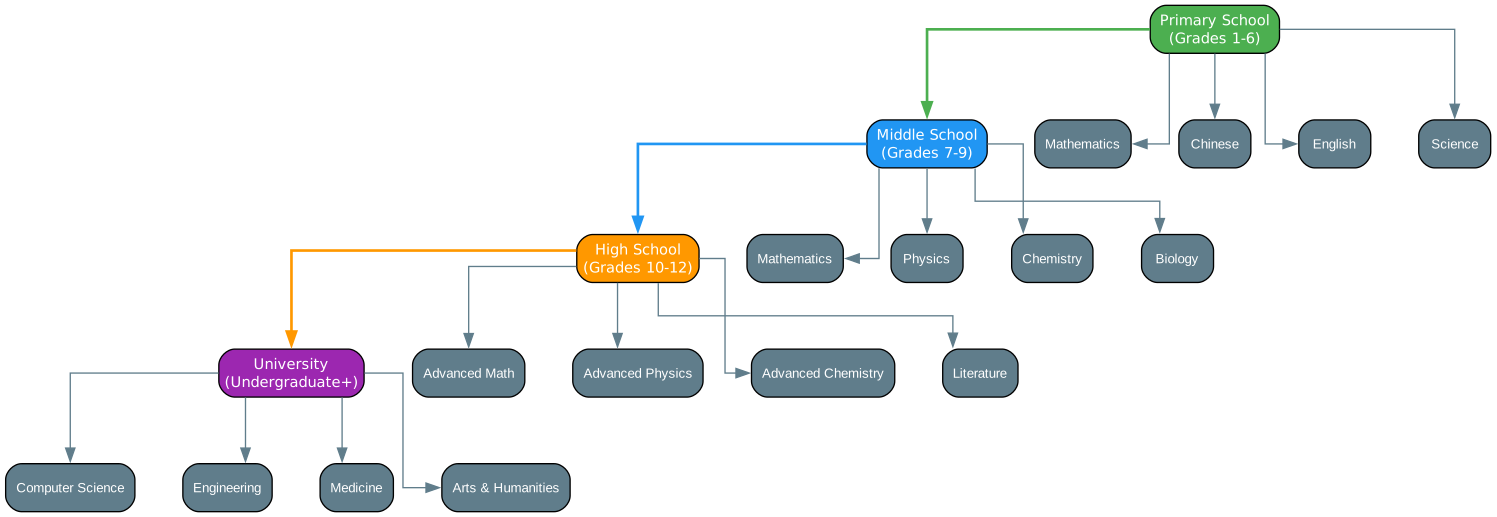
Understanding the Chinese Education System
The Chinese education system follows a structured progression that the ChinaTextbook repository mirrors in its organization. Understanding this hierarchy is essential for navigating the materials effectively.
Primary School (Grades 1-6, Ages 6-12)
Primary education in China forms the foundation of the entire educational journey. During these six years, students develop fundamental skills in:
-
Mathematics: Starting with basic arithmetic and progressing through fractions, decimals, and introductory geometry. The curriculum emphasizes mental calculation and problem-solving skills.
-
Chinese Language: Comprehensive instruction in reading, writing, and speaking Mandarin Chinese. Students learn thousands of characters, proper stroke order, and classical poetry appreciation.
-
English: Introduction to English as a foreign language, focusing on basic vocabulary, simple grammar, and conversational skills.
-
Science: Basic scientific concepts in physics, chemistry, and biology, presented in an age-appropriate manner with hands-on experiments.
-
Moral Education: Character development, civic responsibility, and social values integrated throughout the curriculum.
Middle School (Grades 7-9, Ages 12-15)
Middle school represents a critical transition period where students begin more specialized study:
-
Mathematics: Algebra, geometry, and introductory statistics. The curriculum becomes more rigorous, preparing students for high school mathematics.
-
Physics: Introduction to mechanics, optics, and electromagnetism. Laboratory work becomes more important.
-
Chemistry: Basic chemical concepts, atomic structure, chemical reactions, and introductory organic chemistry.
-
Biology: Cell biology, genetics, human anatomy, and ecology. Students learn about the scientific method and biological research.
-
History and Geography: Chinese history, world history, and physical and human geography.
High School (Grades 10-12, Ages 15-18)
High school education in China is intensive and focused on preparation for the Gaokao (National College Entrance Examination):
-
Advanced Mathematics: Calculus, advanced algebra, probability theory, and analytic geometry. The curriculum is demanding and comprehensive.
-
Advanced Sciences: Each science subject is taught at a deeper level, with significant laboratory components and theoretical foundations.
-
Literature and Language: Advanced Chinese literature, classical texts, and intensive writing practice. English instruction continues with more complex texts.
-
Specialization: Students typically choose between science-focused and humanities-focused tracks, determining which subjects they will emphasize.
University Level (Undergraduate and Beyond)
University education covers an enormous range of disciplines:
-
Professional Studies: Major-specific courses in fields ranging from engineering and medicine to humanities and social sciences.
-
Research Skills: Training in research methodology, academic writing, and critical analysis.
-
Practical Applications: Laboratory work, internships, and practical training relevant to the chosen field.
Subject Categories
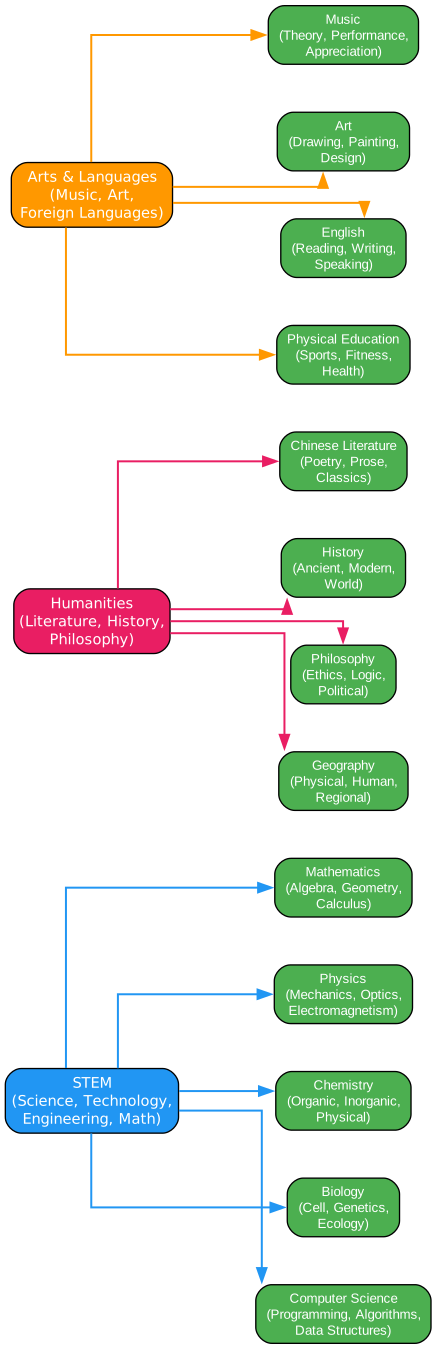
Understanding the Subject Organization
The ChinaTextbook repository organizes materials into three major subject categories, making it easy to find relevant resources.
STEM (Science, Technology, Engineering, Mathematics)
The STEM category contains the most extensive collection of materials:
-
Mathematics: From basic arithmetic in primary school to advanced calculus and linear algebra at the university level. The Chinese mathematics curriculum is known for its rigor and emphasis on problem-solving.
-
Physics: Comprehensive coverage from introductory mechanics to advanced topics like quantum physics and relativity. Laboratory manuals accompany theoretical textbooks.
-
Chemistry: Organic, inorganic, physical, and analytical chemistry. The progression from middle school to university is carefully structured.
-
Biology: Cell biology, genetics, ecology, and human biology. Advanced materials include molecular biology and biotechnology.
-
Computer Science: Programming fundamentals, algorithms, data structures, and specialized topics like artificial intelligence and machine learning.
Humanities (Literature, History, Philosophy)
The humanities category provides deep insights into Chinese culture and thought:
-
Chinese Literature: Classical poetry, modern literature, and literary analysis. Students study works from ancient times to contemporary authors.
-
History: Chinese history from ancient civilizations through modern times, as well as world history. The curriculum emphasizes understanding historical patterns and their relevance today.
-
Philosophy: Chinese philosophy including Confucianism, Taoism, and Buddhism, as well as Western philosophical traditions.
-
Geography: Physical geography, human geography, and regional studies. The curriculum covers both Chinese geography and world geography.
Arts and Languages
This category encompasses creative and linguistic subjects:
-
Music: Music theory, instrument instruction, and music appreciation. Both traditional Chinese music and Western classical music are covered.
-
Art: Drawing, painting, design principles, and art history. Students learn both traditional Chinese art techniques and modern approaches.
-
English: Comprehensive English language instruction from beginner to advanced levels, including reading, writing, speaking, and listening skills.
-
Physical Education: Sports, fitness, and health education. The curriculum promotes physical well-being alongside academic achievement.
Resource Organization
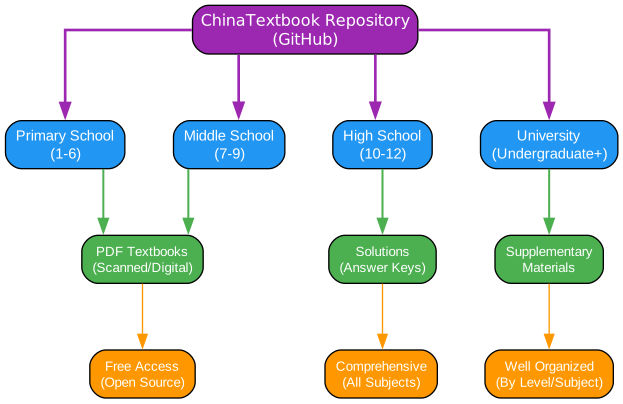
Understanding the Repository Structure
The ChinaTextbook repository is organized to make finding materials intuitive and efficient.
By Education Level
The primary organization follows the Chinese education system structure:
-
Primary School Materials: Organized by grade (1-6) and subject. Each grade level has textbooks for all required subjects.
-
Middle School Materials: Organized by grade (7-9) with separate sections for each subject. Includes both textbooks and supplementary materials.
-
High School Materials: Organized by grade (10-12) and subject track (science vs. humanities). Includes exam preparation materials.
-
University Materials: Organized by field of study and course level. Includes undergraduate and graduate-level materials.
By Format
Materials are available in various formats:
-
PDF Textbooks: The primary format, including both scanned copies of printed textbooks and digitally-created materials.
-
Solutions and Answer Keys: Many textbooks include separate solution manuals, essential for self-study and verification.
-
Supplementary Materials: Additional resources like workbooks, reference sheets, and study guides that complement the main textbooks.
Benefits of the Repository
The open-source nature of ChinaTextbook provides several key benefits:
-
Free Access: All materials are available at no cost, removing financial barriers to education.
-
Comprehensive Coverage: The collection spans all education levels and subjects, providing a complete educational resource.
-
Well Organized: Materials are systematically organized by level and subject, making it easy to find specific resources.
-
Community Contributions: As an open-source project, the repository benefits from community contributions and corrections.
Learning Pathway
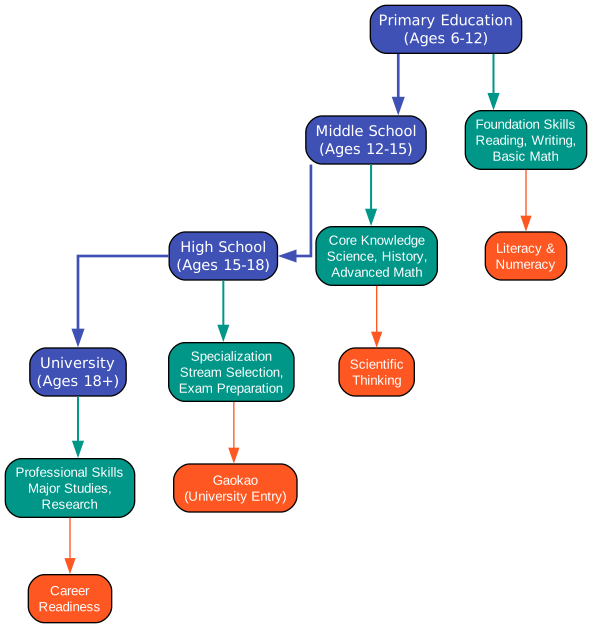
Understanding the Educational Journey
The learning pathway diagram illustrates how students progress through the Chinese education system and what they achieve at each stage.
Primary Education Stage (Ages 6-12)
The primary stage focuses on building foundational skills:
-
Foundation Skills: Reading, writing, and basic mathematics form the core of primary education. Students develop literacy in Chinese characters and numeracy skills.
-
Learning Focus: The curriculum emphasizes memorization, basic comprehension, and fundamental problem-solving. Students learn to follow instructions and develop study habits.
-
Key Outcomes: By the end of primary school, students should be literate in Chinese, comfortable with basic arithmetic, and have introductory knowledge of science and social studies.
Middle School Stage (Ages 12-15)
Middle school builds on primary foundations:
-
Core Knowledge: Students deepen their understanding of mathematics, sciences, and humanities. The curriculum becomes more specialized and demanding.
-
Learning Focus: Critical thinking, scientific reasoning, and analytical skills are developed. Students begin to apply knowledge to solve complex problems.
-
Key Outcomes: Students develop scientific thinking, understand basic scientific principles, and are prepared for the more intensive high school curriculum.
High School Stage (Ages 15-18)
High school is the most intensive period:
-
Specialization: Students choose between science and humanities tracks, focusing on subjects relevant to their future university studies.
-
Exam Preparation: A significant portion of high school is dedicated to preparing for the Gaokao, the National College Entrance Examination. This exam determines university admission.
-
Key Outcomes: Successful completion of the Gaokao and admission to university. Students have developed deep knowledge in their chosen subjects.
University Stage (Ages 18+)
University education prepares students for careers:
-
Professional Skills: Students develop expertise in their chosen field through specialized courses, research projects, and practical training.
-
Learning Focus: Independent research, critical analysis, and professional development. Students learn to apply theoretical knowledge to real-world problems.
-
Key Outcomes: Career readiness, professional qualifications, and the ability to contribute to their field of study.
Key Features
| Feature | Description |
|---|---|
| Comprehensive Coverage | All education levels from primary to university |
| Multiple Subjects | STEM, humanities, arts, and languages |
| Free Access | Open-source, no cost to users |
| PDF Format | Easy to download and read on any device |
| Solutions Included | Answer keys for self-study |
| Well Organized | Clear directory structure by level and subject |
| Community Driven | Open to contributions and improvements |
| Regular Updates | New materials added regularly |
How to Use the Repository
Accessing Materials
The repository is hosted on GitHub and can be accessed freely:
# Clone the repository
git clone https://github.com/TapXWorld/ChinaTextbook.git

# Navigate to the desired level
cd ChinaTextbook

# Browse by education level and subject
ls Primary/
ls MiddleSchool/
ls HighSchool/
ls University/
Directory Structure
The repository follows a clear organizational structure:
ChinaTextbook/
├── Primary/
│   ├── Grade1/
│   ├── Grade2/
│   ├── Grade3/
│   ├── Grade4/
│   ├── Grade5/
│   └── Grade6/
├── MiddleSchool/
│   ├── Grade7/
│   ├── Grade8/
│   └── Grade9/
├── HighSchool/
│   ├── Grade10/
│   ├── Grade11/
│   └── Grade12/
└── University/
    ├── ComputerScience/
    ├── Engineering/
    ├── Medicine/
    └── [Other Fields]/
Downloading Specific Files
For large files, you may want to download specific textbooks:
# Download a specific file using wget
wget https://raw.githubusercontent.com/TapXWorld/ChinaTextbook/main/path/to/file.pdf

# Or use GitHub's download feature for individual files
Educational Value
For Students
- Self-Study: Access high-quality textbooks for independent learning
- Exam Preparation: Use materials to prepare for standardized tests
- Subject Review: Reinforce classroom learning with additional resources
- Language Learning: Chinese language learners can access authentic materials
For Educators
- Teaching Resources: Use textbooks as reference materials
- Curriculum Development: Compare Chinese curriculum with other systems
- Research: Study Chinese educational approaches and methodologies
- Supplementary Materials: Enhance existing curricula with Chinese perspectives
For Researchers
- Comparative Education: Study the Chinese education system
- Curriculum Analysis: Examine how subjects are taught in China
- Educational Policy: Understand Chinese educational priorities
- Cross-Cultural Studies: Compare educational approaches across cultures
Chinese Education System Context
The Gaokao
The National College Entrance Examination (Gaokao) is the culmination of Chinese secondary education. This high-stakes examination determines university admission and, by extension, career prospects. Key aspects include:
- Comprehensive Testing: The exam covers multiple subjects over several days
- High Competition: Millions of students compete for limited university spots
- Life Impact: Gaokao scores significantly influence future opportunities
- Regional Variations: Different provinces may have slightly different exam formats
Educational Philosophy
Chinese education emphasizes:
- Foundational Knowledge: Strong emphasis on basics before advanced topics
- Practice and Repetition: Extensive problem-solving and memorization
- Teacher Authority: Respect for teachers as knowledge authorities
- Collective Learning: Group study and peer support are common
- Examination Culture: Regular testing to assess progress
Conclusion
ChinaTextbook represents a significant contribution to open education. By providing free access to comprehensive Chinese educational materials, it enables learners worldwide to benefit from the Chinese education system’s resources. Whether you’re a student seeking additional study materials, an educator looking for teaching resources, or a researcher studying Chinese education, this repository offers invaluable content.
The systematic organization by education level and subject makes it easy to find relevant materials, while the open-source nature ensures continued improvement and expansion. As education becomes increasingly global, resources like ChinaTextbook help bridge cultural and linguistic gaps, promoting understanding and knowledge sharing across borders.
Related Posts
- Apollo 11: Original AGC Source Code
- Pascal Editor: 3D Architectural Building Tool
- Open Source Learning Resources
Links

Enjoyed this post? Never miss out on future posts by following us
