OpenMetadata: Unified Metadata Platform for Data Discovery, Observability, and Governance
OpenMetadata is a unified metadata platform for data discovery, data observability, and data governance powered by a central metadata repository, in-depth column-level lineage, and seamless team collaboration. As one of the fastest-growing open-source projects in the data engineering space with over 13,400 stars on GitHub, OpenMetadata enables end-to-end metadata management, giving organizations the freedom to unlock the value of their data assets.
Understanding the Architecture
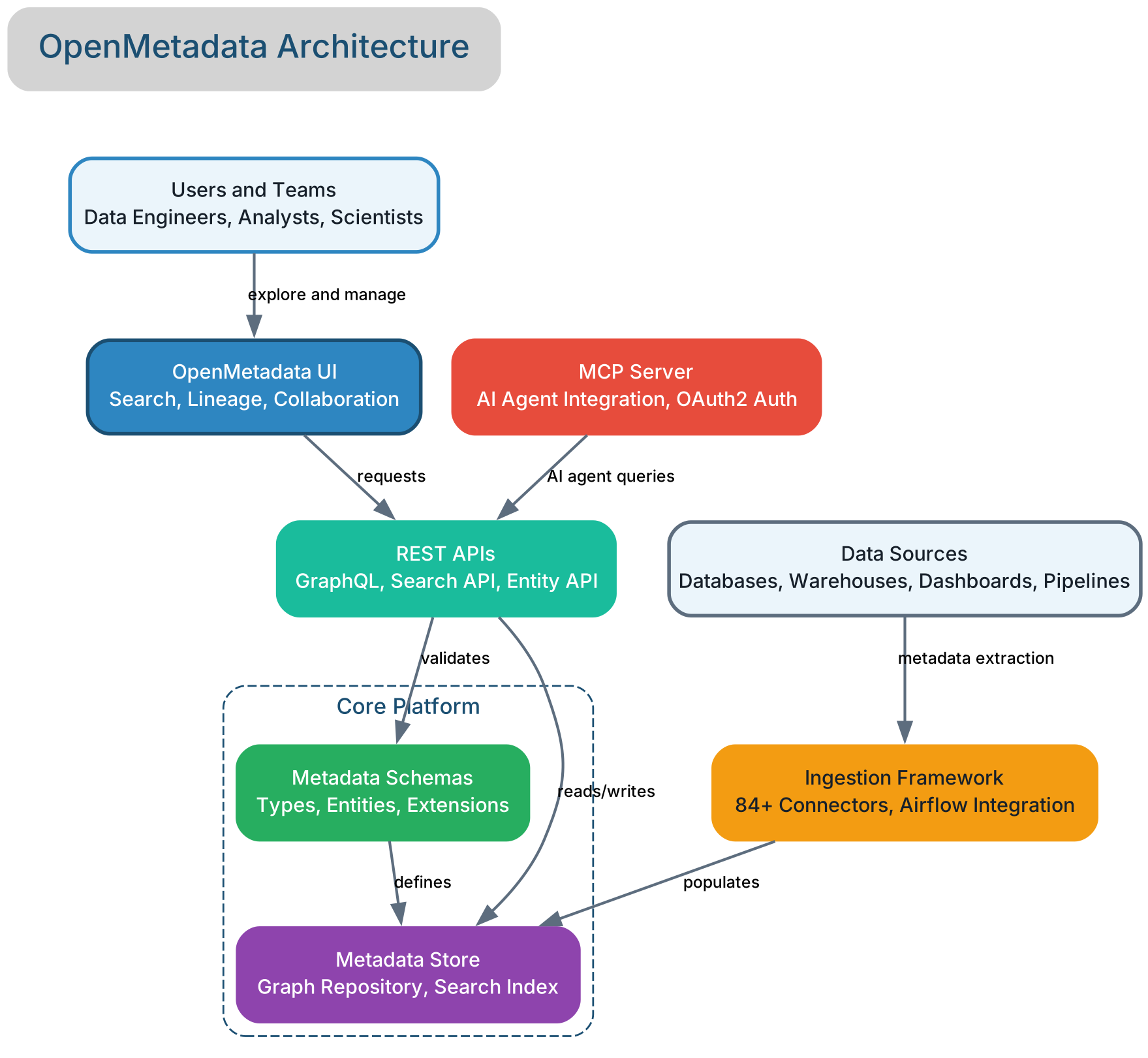
The architecture diagram above illustrates OpenMetadata’s four core components and how they interact to provide a comprehensive metadata management platform.
Metadata Schemas serve as the foundational layer, defining the core vocabulary and types for metadata based on common abstractions. They support custom extensions and properties to suit different use cases and domains, ensuring the platform can adapt to any organization’s unique data landscape.
Metadata Store is the central repository that stores and manages the metadata graph, connecting data assets, users, and tool-generated metadata in a unified way. It combines a graph database for relationship traversal with a search index for fast discovery queries.
Metadata APIs provide the interfaces for producing and consuming metadata, built on top of the metadata schemas. They enable seamless integration of user interfaces and tools, systems, and services with the metadata store through REST, GraphQL, and search endpoints.
Ingestion Framework is a pluggable framework for ingesting metadata from various sources and tools to the metadata store. It supports about 84+ connectors for data warehouses, databases, dashboard services, messaging services, pipeline services, and more.
Key Features
Data Discovery
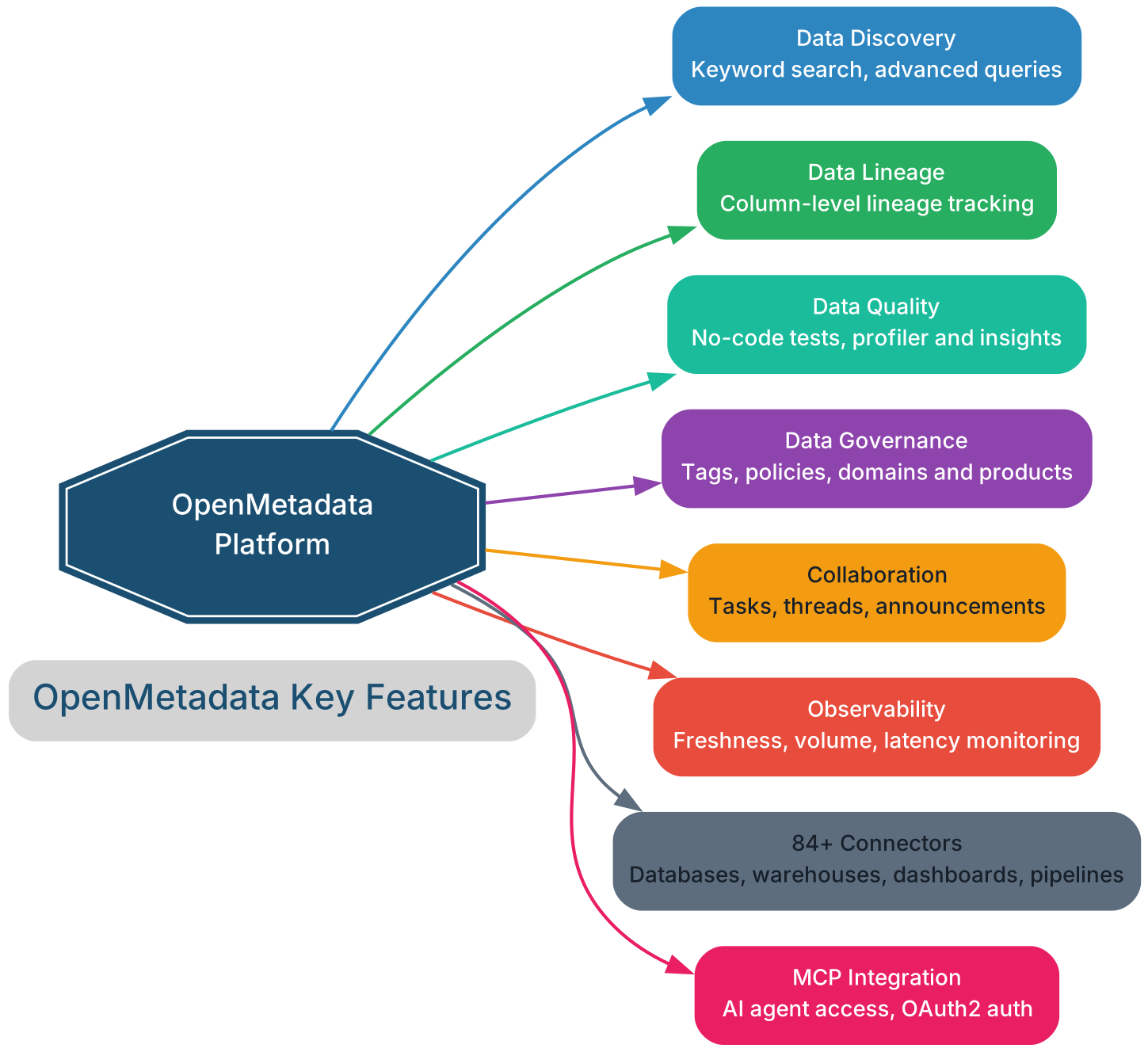
Find and explore all your data assets in a single place using various strategies such as keyword search, data associations, and advanced queries. You can search across tables, topics, dashboards, pipelines, and services. The search is powered by Elasticsearch, providing fast and relevant results even across large data estates.
Data Lineage
Track and visualize the origin and transformation of your data assets end-to-end. OpenMetadata supports column-level lineage, allowing you to trace individual fields through complex transformation pipelines. You can filter queries and edit lineage manually using a no-code editor, making it accessible to both technical and non-technical users.
Data Quality and Profiler
Measure and monitor data quality with no-code test definitions to build trust in your data. You can define and run data quality tests, group them into test suites, and view the results in an interactive dashboard. With powerful collaboration features, data quality becomes a shared responsibility across your organization.
Data Governance
Enforce data policies and standards across your organization. Define data domains and data products, assign owners and stakeholders, and classify data assets using tags and terms. Use powerful automation features to auto-classify your data, reducing the manual burden of governance.
Data Collaboration
Communicate, converse, and cooperate with other users and teams on data assets. You can get event notifications, send alerts, add announcements, create tasks, and use conversation threads. This social layer transforms metadata management from a passive catalog into an active collaboration platform.
Data Observability
Monitor the health and performance of your data assets and pipelines. View metrics such as data freshness, data volume, data quality, and data latency. Set up alerts and notifications for any anomalies or failures, ensuring you catch data issues before they impact downstream consumers.
MCP Integration for AI Agents
OpenMetadata now includes an MCP (Model Context Protocol) server that enables AI agents to query and interact with your metadata. This is a significant addition for teams using AI-powered development tools, as it allows coding agents and AI assistants to discover data assets, understand lineage, and access data quality metrics directly through the MCP protocol.
The MCP server includes:
- SearchMetadataTool: Search for data assets using keywords and filters
- GetEntityTool: Retrieve detailed information about specific entities
- GetLineageTool: Trace data lineage for any asset
- SemanticSearchTool: Perform semantic search across metadata
- CreateTestCaseTool: Create data quality test cases
- GlossaryTool: Manage business glossary terms
- RootCauseAnalysisTool: Perform root cause analysis on data issues
Data Flow
Understanding the Data Flow
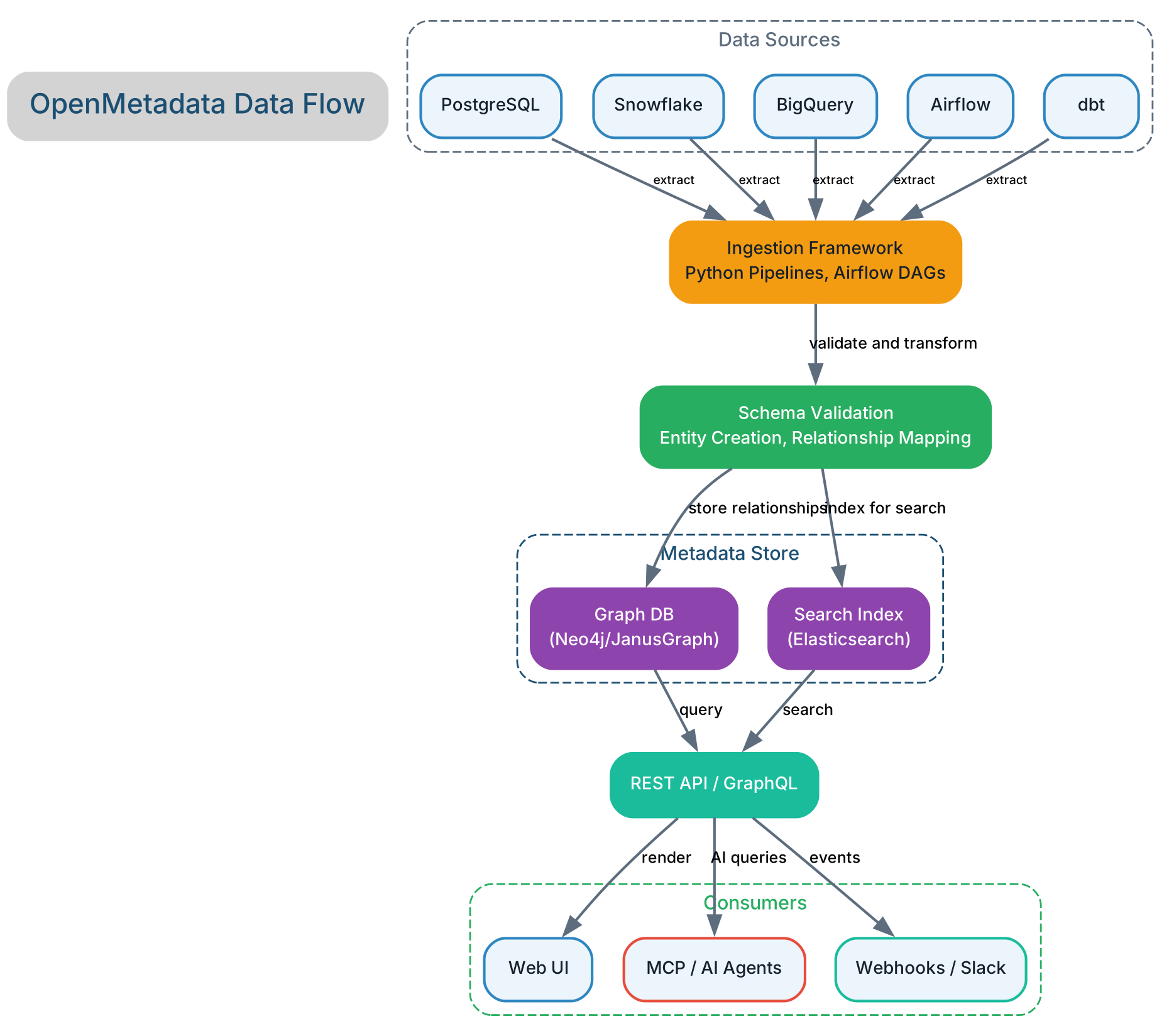
The data flow diagram illustrates how metadata moves through the OpenMetadata platform from source systems to end consumers.
Source Systems include databases (PostgreSQL, MySQL, Snowflake), data warehouses (BigQuery, Redshift), dashboard services (Looker, Tableau, Superset), and pipeline tools (Airflow, dbt). Each source has a dedicated connector in the ingestion framework.
Ingestion Framework orchestrates Python-based pipelines, typically scheduled as Airflow DAGs, that extract metadata from source systems. These pipelines handle schema discovery, statistics collection, lineage extraction, and data profiling.
Schema Validation processes the raw metadata, creating standardized entities and mapping relationships between them. This ensures all metadata conforms to the OpenMetadata schema definitions before being stored.
Metadata Store consists of two complementary systems: a graph database (Neo4j or JanusGraph) for storing and traversing relationships between entities, and a search index (Elasticsearch) for fast full-text and faceted search queries.
REST API / GraphQL provides the unified interface for all consumers to access metadata, whether through the web UI, MCP-enabled AI agents, or webhook integrations with tools like Slack and Microsoft Teams.
Installation
Docker Deployment (Recommended)
The fastest way to get OpenMetadata running is with Docker:
# Clone the repository
git clone https://github.com/open-metadata/OpenMetadata.git
cd OpenMetadata

# Start OpenMetadata using Docker Compose
docker compose -f docker/docker-compose-quickstart/docker-compose.yml up -d
This starts all required services including the metadata store, search index, and the web UI.
Manual Installation
For production deployments, you can install each component separately:
# Install the OpenMetadata ingestion package
pip install openmetadata-ingestion

# Configure the connection to your metadata store
# Edit the configuration file with your database and search engine settings
Airflow Integration
Connect OpenMetadata to your existing Airflow instance:
# Install the OpenMetadata Airflow provider
pip install openmetadata-airflow-apis

# Configure the Airflow connection in your DAGs
# Point to your OpenMetadata instance
Usage
Connecting Data Sources
Once OpenMetadata is running, connect your data sources through the UI:
- Navigate to Settings > Services
- Click Add Service and select your database type
- Provide connection credentials (host, port, authentication)
- Run the ingestion pipeline to populate metadata
Creating Data Quality Tests
OpenMetadata provides a no-code interface for defining data quality tests:
- Navigate to a table in the Data Quality tab
- Click Add Test and select from built-in test types
- Configure test parameters (e.g., null count threshold, value range)
- Schedule test execution via Airflow or the built-in scheduler
Using the MCP Server
For AI agent integration, configure the MCP server:
- Enable the MCP server in your OpenMetadata configuration
- Configure OAuth2 authentication for secure access
- Connect your AI agent (e.g., Claude Code) using the MCP protocol
- Use natural language queries to discover and explore data assets
Features Comparison
| Feature | OpenMetadata | DataHub | Amundsen | Apache Atlas |
|---|---|---|---|---|
| Data Discovery | Yes | Yes | Yes | Yes |
| Column-Level Lineage | Yes | Yes | Limited | Yes |
| Data Quality Tests | Yes (built-in) | Limited | No | No |
| No-Code Test Builder | Yes | No | No | No |
| Data Governance | Yes | Yes | Limited | Yes |
| Collaboration | Yes (threads, tasks) | Limited | No | No |
| MCP Integration | Yes | No | No | No |
| Connectors | 84+ | 70+ | 30+ | 20+ |
| Data Observability | Yes | Limited | No | Limited |
| Open Source | Apache 2.0 | Apache 2.0 | Apache 2.0 | Apache 2.0 |
Troubleshooting
Common Issues
Docker Compose fails to start: Ensure you have at least 4GB of RAM allocated to Docker. OpenMetadata requires Elasticsearch, a database, and the application server.
Ingestion pipeline fails: Check that your source database credentials are correct and that the OpenMetadata server can reach the source system. Network connectivity issues are the most common cause.
Search not returning results: Verify that Elasticsearch is running and the search index has been populated. You can re-index by running the search indexing pipeline.
MCP connection issues: Ensure OAuth2 is properly configured and the MCP server is enabled. Check that your AI agent supports the MCP protocol and has the correct server URL.
Conclusion
OpenMetadata provides a comprehensive, open-source solution for metadata management that goes beyond simple data cataloging. With its unified platform for data discovery, lineage tracking, quality monitoring, governance, and now AI agent integration through MCP, it addresses the full spectrum of metadata challenges that modern data teams face.
The combination of 84+ connectors, column-level lineage, no-code data quality tests, and the new MCP server makes OpenMetadata a compelling choice for organizations looking to build a data-driven culture. Whether you are a data engineer managing complex pipelines, a data analyst searching for the right dataset, or an AI agent needing metadata context, OpenMetadata has you covered.
Links
- OpenMetadata GitHub Repository
- OpenMetadata Documentation
- OpenMetadata Sandbox
- OpenMetadata Slack Community

Enjoyed this post? Never miss out on future posts by following us


