Introduction
Meshery has emerged as a powerful cloud native manager with over 11,000 stars on GitHub and 921 new stars this week alone. This rapid growth reflects the increasing complexity of managing Kubernetes-based infrastructure across multiple clusters and cloud providers. As organizations adopt cloud native architectures, the need for a unified platform to manage service meshes, Kubernetes clusters, and cloud native infrastructure becomes critical. Meshery addresses this challenge by providing a self-service engineering platform that enables the design and management of all Kubernetes-based infrastructure and applications.
The project, maintained by the Cloud Native Computing Foundation, offers visual and collaborative GitOps capabilities that free users from the complexity of YAML files while providing comprehensive control over multi-cluster deployments. With support for 380+ integrations and a growing ecosystem of extensions, Meshery has positioned itself as an essential tool for platform engineers and DevOps teams working with cloud native technologies.
What is Meshery?
Meshery is an open source cloud native manager that provides a unified platform for managing Kubernetes-based infrastructure and applications. Unlike traditional tools that focus on a single aspect of cloud native computing, Meshery offers a comprehensive solution that spans service mesh management, multi-cluster operations, and infrastructure lifecycle management.
The platform supports multiple service meshes including Istio, Linkerd, and Cilium, allowing organizations to standardize their service mesh implementations while maintaining flexibility. Meshery can be deployed on various platforms including Docker, Kubernetes (with support for AKS, EKS, GKE, and other managed services), and even runs directly on Linux, macOS, and Windows through mesheryctl.
What sets Meshery apart is its GitOps-centric approach to infrastructure management. Users can visually design and collaborate on infrastructure configurations, with Meshery intelligently inferring relationships between resources. This visual approach reduces the learning curve associated with Kubernetes and service mesh configurations while providing the same level of control as manual YAML management.
Core Architecture
The Meshery architecture follows a modular design that separates concerns while maintaining tight integration between components. At its core, Meshery consists of a central server component that manages state and orchestrates operations across the infrastructure landscape. This server communicates with various adapters and integrations through well-defined interfaces.
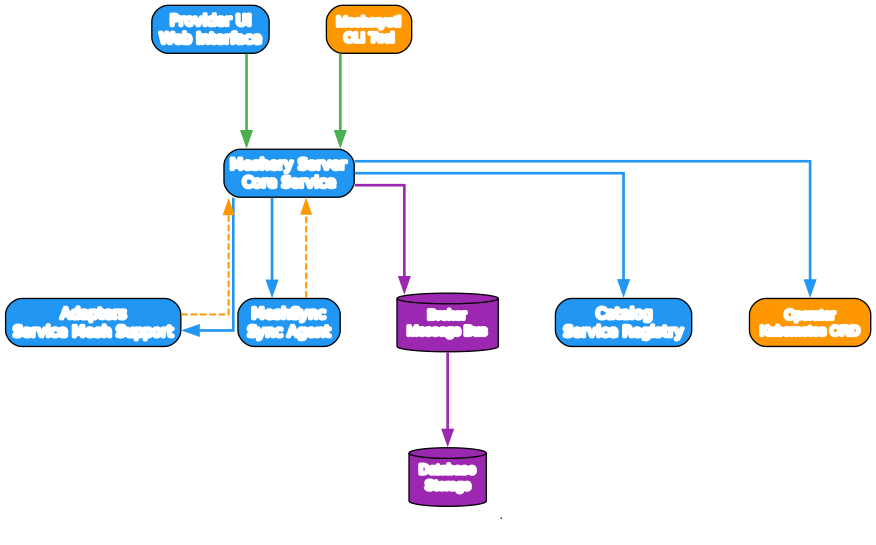
The architecture diagram illustrates the key components of Meshery’s system design. The central server acts as the orchestrator, managing connections to Kubernetes clusters, service meshes, and other cloud native resources. This server communicates with adapters that provide platform-specific implementations, allowing Meshery to work across different environments and infrastructure types.
Meshery’s extensibility model is built around multiple extension points including gRPC adapters, hot-loadable React packages, Golang plugins, and REST/GraphQL APIs. This architecture enables users to extend Meshery’s capabilities to meet their specific needs while maintaining a consistent interface across all extensions. The platform also supports subscriptions on NATS topics, enabling real-time communication between components and external systems.
The architecture incorporates a design configurator that allows users to visually create and manage infrastructure configurations. This configurator supports a wide variety of built-in relationships between components and enables users to create custom relationships as needed. The design configurations can be applied to Kubernetes clusters through GitOps workflows, ensuring consistency across environments.
Service Mesh Management
One of Meshery’s most powerful capabilities is its unified management of service meshes across multiple Kubernetes clusters. Service meshes have become essential for managing microservices communication, providing features like traffic management, security, and observability. However, managing multiple service meshes across different clusters can be complex and time-consuming.
Meshery simplifies this process by providing a single pane of glass for managing Istio, Linkerd, Cilium, and other service mesh implementations. Users can deploy, configure, and monitor service meshes through a unified interface, eliminating the need to switch between different tools for each service mesh platform.
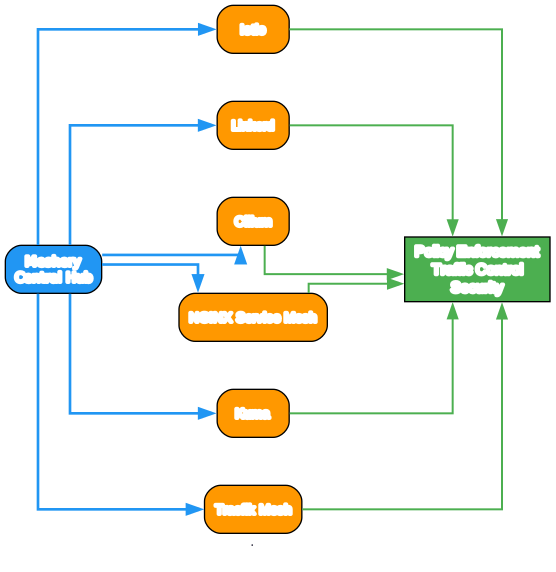
The service mesh management diagram demonstrates how Meshery orchestrates service mesh deployments across multiple clusters. Each cluster maintains its own service mesh instance, but Meshery provides centralized control and visibility into all deployments. This centralized approach enables consistent policies and configurations across the entire infrastructure landscape.
Meshery supports the full lifecycle of service mesh management, from initial deployment to ongoing operations. Users can apply design configurations to service meshes, validate configurations before deployment, and monitor performance metrics in real-time. The platform also supports dry-run capabilities, allowing users to simulate deployments without actually applying changes to production environments.
The integration with Open Policy Agent (OPA) enables context-aware policies for applications. Users can leverage built-in relationships to enforce configuration best practices consistently from code to Kubernetes, without needing to write OPA Rego queries. This integration helps organizations maintain security and compliance across their service mesh implementations.
Key Features
Meshery offers a comprehensive set of features that address the most common challenges in cloud native infrastructure management. These features are designed to work together to provide a complete platform for managing Kubernetes-based infrastructure.
Infrastructure Lifecycle Management
Meshery manages the configuration, deployment, and operation of cloud services and Kubernetes clusters while supporting hundreds of different types of cloud native infrastructure integrations. The platform supports 380+ integrations, covering everything from service meshes and monitoring tools to CI/CD pipelines and configuration management systems.
Users can find infrastructure configuration patterns in Meshery’s catalog of curated design templates, which are filled with configuration best practices. These templates serve as starting points for new deployments, helping teams avoid common pitfalls and accelerate their development cycles.
Multi-Cluster and Multi-Cloud Management
Meshery provides a single pane of glass to manage multiple Kubernetes clusters across any infrastructure, including various cloud providers. This capability is essential for organizations that have adopted a multi-cloud strategy or are running hybrid cloud environments.
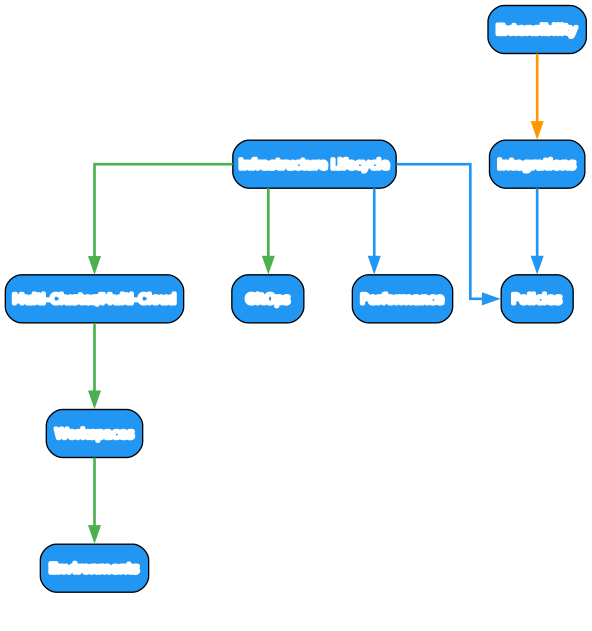
The features diagram highlights Meshery’s core capabilities including multi-cluster management, GitOps workflows, and extensibility. Multi-cluster management enables consistent configuration, operation, and observability across the entire Kubernetes landscape, regardless of where clusters are hosted.
Meshery’s GitOps workflows allow users to visually and collaboratively design and manage infrastructure and microservices. The platform intelligently infers the manner in which each resource interrelates with each other, supporting a broad variety of built-in relationships between components. Users can create their own custom relationships to model their specific infrastructure patterns.
Workspaces and Environments
Meshery introduces Workspaces as a team collaboration feature, serving as the central point for organizing work and serving as a point of access control to Environments and their resources. Workspaces enable teams to organize their infrastructure projects and control access to resources at a granular level.
Environments make it easier to manage, share, and work with a collection of resources as a group, instead of dealing with all Connections and Credentials on an individual basis. This feature is particularly useful for organizations with multiple teams or environments that need to share infrastructure resources securely.
Performance Management
Meshery offers load generation and performance characterization to help assess and optimize the performance of applications and infrastructure. The platform provides performance profiles that enable consistent characterization of infrastructure configurations in the context of how they perform.
Users can create and reuse performance profiles for tracking historical performance of workloads. The platform enables comparison of test results, allowing teams to understand behavioral differences between cloud native network functions and compare performance across infrastructure deployments.
Meshery uses the Fortio load generator to drive performance tests, with a pluggable load generator interface for extensibility. The platform provides configurable performance profiles with tunable facets, enabling users to generate TCP, gRPC, and HTTP load with customizable parameters such as duration, concurrent threads, and load generator type.
Policies and Compliance
Meshery integrates with Open Policy Agent (OPA) to provide context-aware policies for applications. Users can leverage built-in relationships to enforce configuration best practices consistently from code to Kubernetes, without needing to write OPA Rego queries.
This integration helps organizations maintain security and compliance across their infrastructure. The platform enables configuration validation against deployment and operational best practices, helping teams identify potential issues before they impact production environments.
Integrations and Extensibility
Meshery offers robust capabilities for managing multiple tenants within a shared Kubernetes infrastructure. The platform provides the tools and integrations necessary to create secure, isolated, and manageable multi-tenant environments, allowing multiple teams or organizations with granular control over their role-based access controls.
Meshery’s “multi-player” functionality refers to its collaborative features that enable multiple users to interact with and manage cloud native infrastructure simultaneously. This is primarily facilitated through Meshery extensions, which provide additional capabilities and integrations.
The platform’s extensibility features include gRPC adapters, hot-loadable React packages, Golang plugins, subscriptions on NATS topics, and consumable and extendable API interfaces via REST and GraphQL. These extension points make Meshery ideal as the foundation of an internal developer platform.
Integration and Deployment
Meshery provides flexible deployment options to meet the needs of different organizations and environments. The platform can be deployed on Docker, Kubernetes, or run directly on Linux, macOS, and Windows through mesheryctl.
The installation process is straightforward, with a one-line installation command that works across platforms:
curl -L https://meshery.io/install | bash -
For Kubernetes deployments, Meshery offers comprehensive support including AKS, EKS, GKE, Helm charts, kind, Minikube, OpenShift, Rancher, and more. The platform also provides Docker Desktop extensions and Docker App installations for users who prefer container-based deployments.
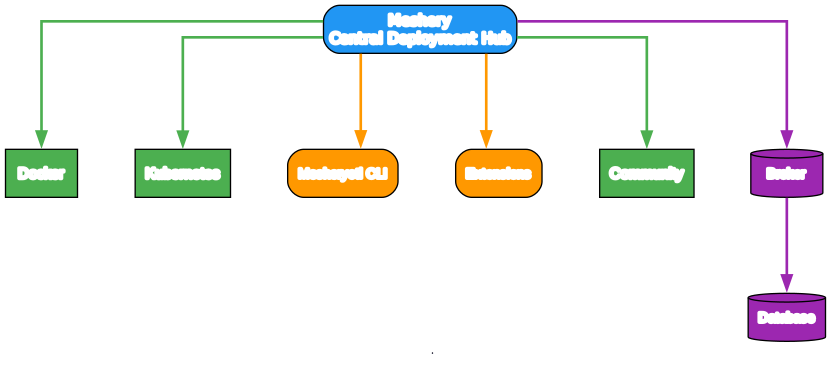
The integration and deployment diagram illustrates the various ways Meshery can be deployed and integrated into existing infrastructure. The platform supports multiple deployment modes, from cloud-native deployments on Kubernetes to lightweight installations on developer machines.
Meshery’s CLI tool, mesheryctl, provides powerful capabilities for managing Meshery deployments, importing designs, discovering Kubernetes clusters, and performing various operations from the terminal. This CLI tool is particularly useful for automation and CI/CD pipelines.
The platform also integrates with GitHub repositories, enabling infrastructure snapshots directly in pull requests. Users can preview deployments, view changes between pull requests, and get infrastructure snapshots within their PR workflow, improving collaboration and reducing deployment risks.
Getting Started
Getting started with Meshery is straightforward, thanks to comprehensive documentation and multiple installation options. The official website provides detailed guides for each platform, including Docker, Kubernetes, and direct installations on Linux, macOS, and Windows.
For users who prefer a hands-on approach, Meshery offers a Cloud Native Playground at play.meshery.io, where users can try Meshery directly in their browser without any installation. This playground provides a safe environment to explore Meshery’s features and capabilities.
The documentation covers all aspects of Meshery, from installation and configuration to advanced features like performance management and policy enforcement. The community handbook provides resources for new contributors, including guides on getting started, finding issues to work on, and participating in community meetings.
Meshery’s community is active and welcoming, with regular meetings on the community calendar, meeting recordings available on YouTube, and a discussion forum for asking questions and sharing knowledge. The platform also has a MeshMates program, where experienced community members help newcomers learn their way around and discover live projects.
Conclusion
Meshery has established itself as a comprehensive cloud native manager that addresses the complex challenges of managing Kubernetes-based infrastructure. With its unified platform approach, visual GitOps workflows, and extensive feature set, Meshery provides organizations with the tools they need to manage service meshes, Kubernetes clusters, and cloud native infrastructure efficiently.
The platform’s focus on multi-cluster management, performance optimization, and policy enforcement makes it particularly valuable for organizations with complex infrastructure requirements. By providing a single pane of glass for managing cloud native resources, Meshery reduces operational overhead and improves consistency across environments.
As cloud native technologies continue to evolve, Meshery’s modular architecture and extensibility ensure that it can adapt to new requirements and integrate with emerging tools and platforms. The active community and comprehensive documentation make it accessible to both newcomers and experienced practitioners.
For organizations looking to simplify their cloud native infrastructure management, Meshery offers a powerful and flexible solution that can scale from small projects to enterprise-level deployments. The platform’s commitment to open source and community-driven development ensures that it will continue to evolve and meet the changing needs of the cloud native ecosystem.
Resources

Enjoyed this post? Never miss out on future posts by following us


